World Bank Releases Roadmap for Fostering Coral Reef Resilience in the Maldives
The comprehensive report outlines how the Maldives can protect its coral reef ecosystems — worth an estimated $10 billion in ecosystem services — through integrated coastal management, sustainable tourism, and climate-adaptive fisheries.
Mariyam Shifa
The World Bank published a comprehensive roadmap for coral reef resilience in the Maldives, estimating the total value of the nation's reef ecosystem services at $10 billion annually — encompassing coastal protection, fisheries productivity, tourism revenue, and biodiversity value. The 180-page report, titled 'Reef Resilience and Economic Sustainability in the Maldives,' was developed over two years in collaboration with the Maldives government and international marine research institutions.
The roadmap centres on three interconnected pillars. The first calls for integrated coastal management that moves beyond piecemeal island-level planning to atoll-scale governance of reef resources. This includes establishing a network of 30 new marine protected areas by 2030, covering at least 20% of the country's reef area, up from the current 7%. The second pillar focuses on sustainable tourism practices, recommending mandatory environmental impact assessments for all new resort developments and a cap on visitor numbers at ecologically sensitive sites.
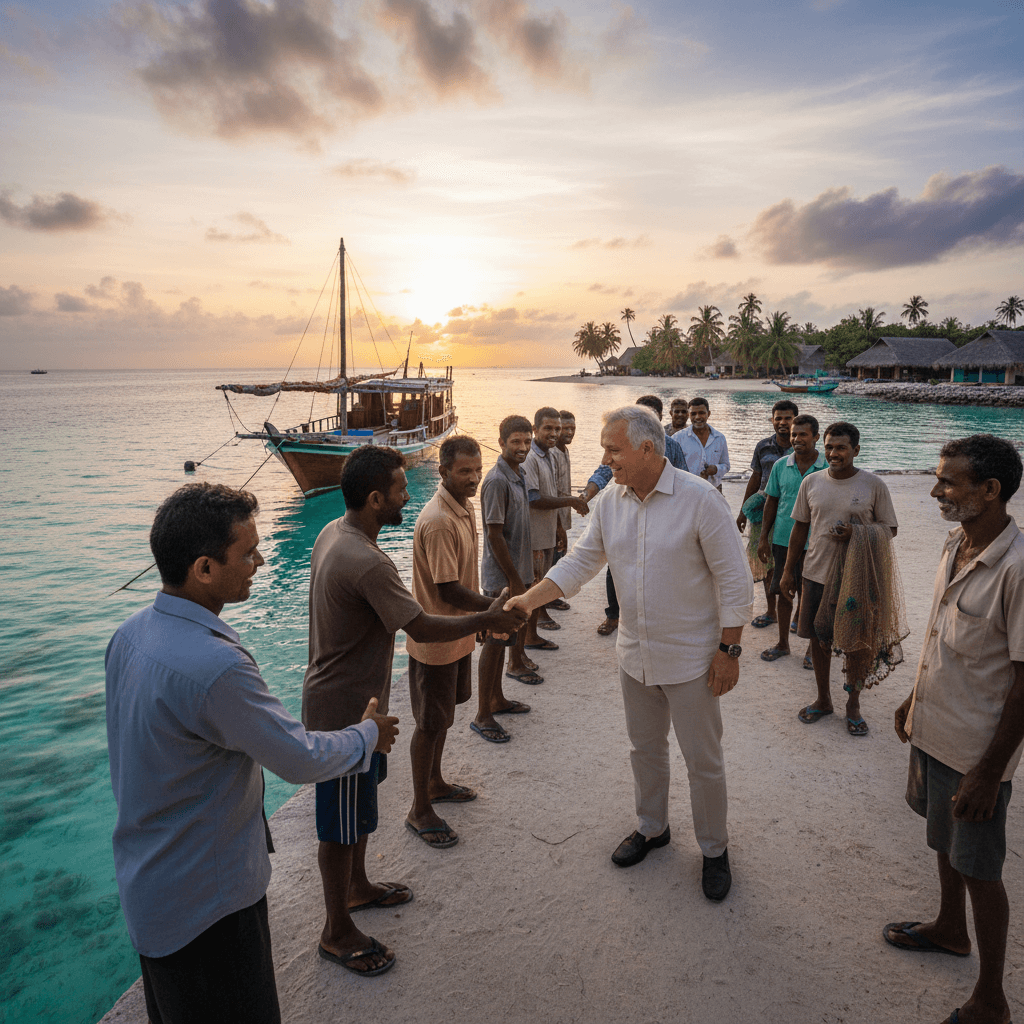
The third pillar addresses climate-adaptive fisheries, recognising that the traditional reef fishery supports the livelihoods of approximately 11,000 Maldivians. The report recommends transitioning to deeper-water pelagic fisheries as shallow reef productivity declines, supported by training programmes and equipment subsidies for affected fishing communities.
The World Bank has offered a $25 million concessional loan facility to support implementation of the roadmap's recommendations, with disbursements tied to measurable outcomes including increased marine protected area coverage, reduced fishing pressure on vulnerable reef systems, and adoption of sustainable tourism standards by at least 60% of resort operators. The Maldives government has signalled its intention to begin negotiations on the facility in the second quarter of 2026.
Mariyam Shifa
Environment Editor
Marine biologist turned journalist.