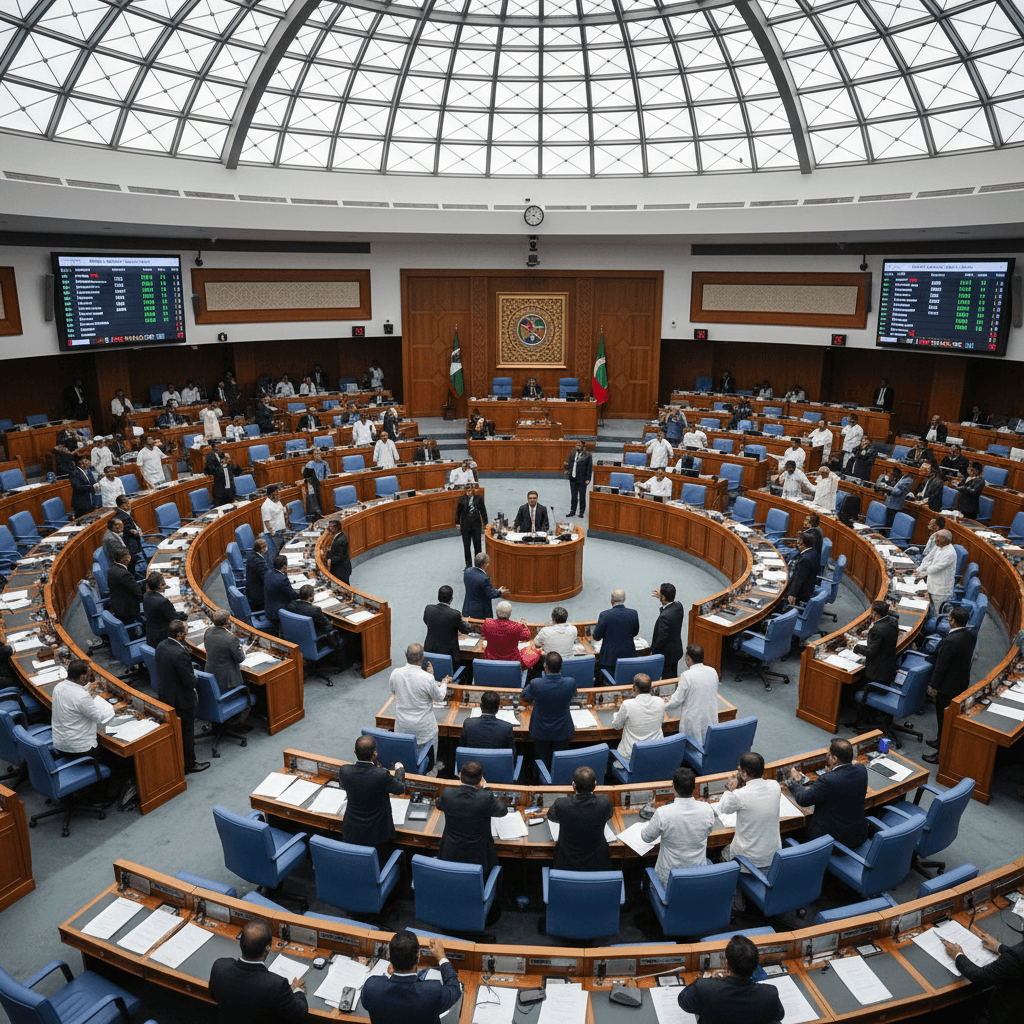
Supreme Court Anti-Defection Case Could Fragment PNC's Parliamentary Supermajority
A pending Supreme Court challenge to the anti-defection law could release MPs from party-line voting obligations, potentially reshaping the balance of power in the People's Majlis ahead of the 2028 election cycle.
Fathimath Ali
The Supreme Court of the Maldives is set to hear a constitutional challenge to the anti-defection law that has kept the People's National Congress supermajority intact since the 2024 parliamentary elections. The case, brought by a coalition of opposition MPs and civil liberties organisations, argues that the law violates the constitutional right of elected representatives to vote according to their conscience.
Under the current anti-defection provisions, any MP who votes against their party's official position on three or more occasions can be expelled from parliament and forced to seek re-election. This mechanism has given the PNC leadership near-absolute control over legislative outcomes, enabling the passage of controversial measures including the Eighth Amendment referendum bill.
Legal scholars are divided on the likely outcome. Proponents of striking down the law point to Article 75 of the Constitution, which states that members of the Majlis shall vote based on independent judgement. Defenders of the law argue it was enacted through proper legislative procedure and serves the democratic purpose of preventing political horse-trading.
If the court rules the law unconstitutional, as many as 15 to 20 PNC legislators who have privately expressed dissatisfaction with party leadership could begin voting independently. Such a shift would effectively end the supermajority and force the government to negotiate legislation on a bill-by-bill basis, fundamentally altering the political landscape ahead of 2028.
Fathimath Ali
Parliamentary Affairs Reporter
Fathimath covers legislative proceedings and constitutional law.
Public Discourse
68.7% said no. That's not a margin, that's a mandate. Even the coconut palms were leaning our way.
342 likesWe proposed efficiency. The people chose... more elections. Democracy is expensive, but we respect the receipt.
156 likesWhen three former presidents agree on something, you know the country has spoken. Even the fish are united on this one.
278 likesCan we all just agree that fewer elections means fewer arguments at the tea shop? No? Okay, pass the hedhikaa.
201 likesThe people have spoken louder than a loudspeaker on a campaign dhoni at 2am. Beautiful.
189 likesRome wasn't built in a day, and neither is a nation. Give us time. We're working. Slowly. But working.
98 likesSovereignty means making our own decisions — including how often we queue up to vote. The people chose wisely.
234 likesMy position is that everyone else's position has some merit. That's why they call us the reasonable ones. Also, who brought the bajiya?
312 likesDemocracy is not a cost to be cut. It's an investment. And this week, the returns were magnificent.
267 likesWe accept the result with grace and dignity. Now if you'll excuse us, we have a budget to balance. Someone has to.
145 likesThe Maldives doesn't need advice from abroad on how to run elections. We've been doing democracy since... well, recently. But still.
176 likesI voted, had lunch, voted again in the council election, had tea, then voted in the WDC election. Three ballots. My finger was blue for a week.
389 likesComments are AI-generated satirical perspectives representing fictional party viewpoints for entertainment purposes only. They do not reflect real party positions or real individuals. See our AI Content Disclaimer for details.