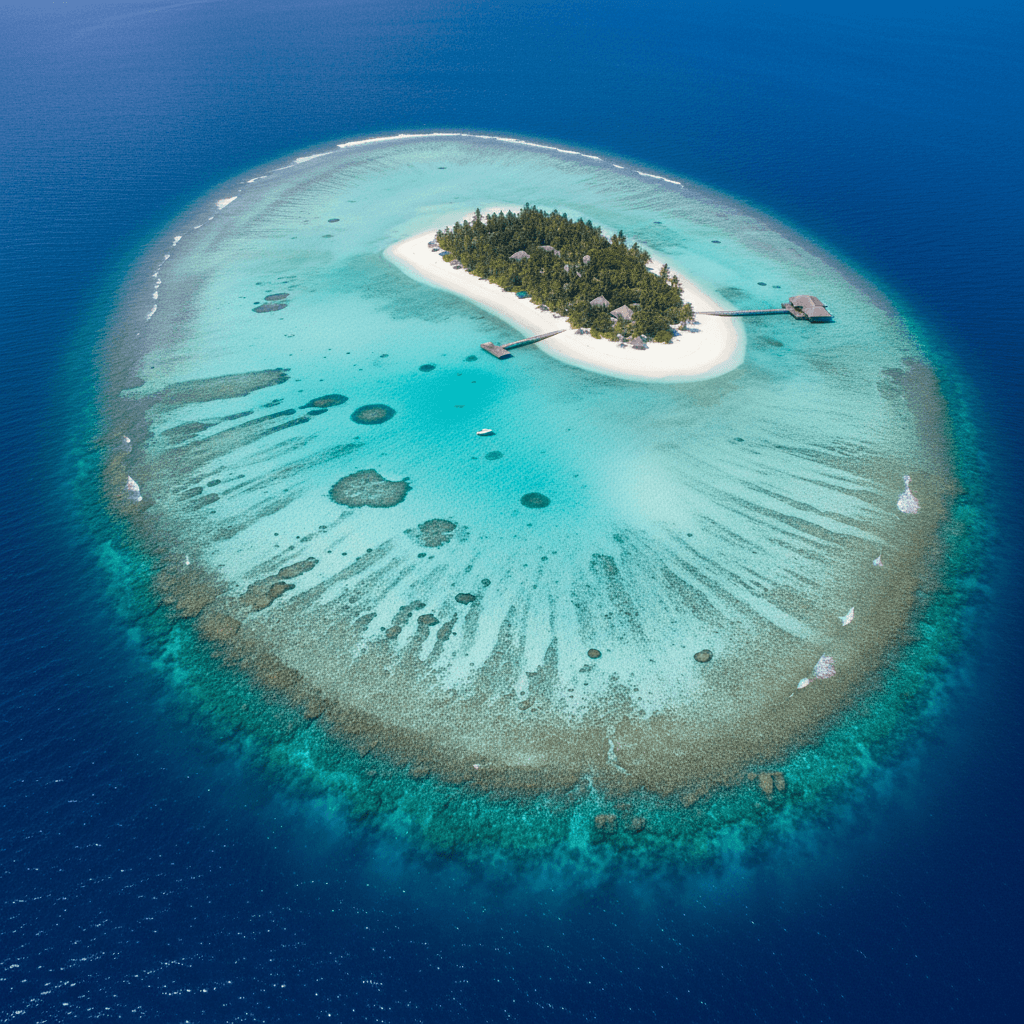
Maldives Reefs at Risk: Global Coral Tipping Point of 1.2°C Already Exceeded
Scientists warn that the thermal tipping point for warm-water coral reefs has been crossed, and without stringent climate mitigation, the upper threshold of 1.5°C may be breached within the next decade — threatening the foundation of the Maldivian economy.
Mariyam Shifa
A landmark study published in the journal Nature Climate Change has confirmed that the lower thermal tipping point for warm-water coral reefs — 1.2 degrees Celsius above pre-industrial levels — has already been exceeded globally. For the Maldives, where coral reefs underpin over 70% of economic activity through tourism and fisheries, the findings carry existential implications.
The research, conducted by an international consortium of 42 marine scientists across 12 countries, analysed bleaching data from over 300 reef sites spanning three decades. The study found that at current warming levels of approximately 1.3 degrees Celsius, mass bleaching events are now occurring with a frequency that prevents full reef recovery between episodes. In the Maldives, the average recovery interval has shrunk from 15 years in the 1990s to just 6 years today.
The study's lead author, Professor Terry Hughes of James Cook University, warned that without aggressive emissions reductions, the upper tipping point of 1.5 degrees Celsius could be breached within the next decade. Beyond this threshold, the research projects that 70 to 90% of existing warm-water coral cover will be lost permanently, transforming reef ecosystems into algae-dominated systems incapable of supporting current biodiversity levels.
Maldivian Environment Minister Aminath Shauna responded to the findings by calling for accelerated implementation of the country's Climate Change Act and urging developed nations to honour their commitments under the Loss and Damage Fund established at COP28. 'The Maldives contributes less than 0.003% of global emissions,' Shauna said, 'yet we stand to lose everything. The science is no longer a warning — it is a documentation of loss already underway.'
Mariyam Shifa
Environment Editor
Marine biologist turned journalist.